Short answer: sublimation is the cheaper, simpler process if you print on white or light polyester and on coated hard goods like mugs. DTF is the one to pick as soon as you want cotton, dark colors or mixed fabrics, because it prints a white layer under the design. They are not the same process, and a sublimation printer cannot make DTF transfers.
Is DTF printing the same as sublimation?
No, and the confusion is understandable: both end with a heat press. What happens before the press is different.
- Sublimation prints special dye ink on paper. Under heat the dye turns to gas and bonds with polyester fibers or a polymer coating. The color becomes part of the material. There is no white ink.
- DTF prints pigment ink on film, color first and white on top, then adds an adhesive powder. Under heat the whole design is glued onto the fabric as a thin layer.
From those two sentences, everything else follows. No white ink means sublimation only shows up on light backgrounds. A glued layer means DTF sticks to almost anything woven. If you want the DTF steps in detail, they are in our guide to what a DTF printer is.
Which fabrics can each one print?
This is the question that decides most purchases.
- 100% cotton tee, any color: DTF. Sublimation dye has nothing to bond with in cotton.
- Black or navy hoodie: DTF. Its white underbase keeps the colors bright; sublimation would vanish into the dark fabric.
- White polyester jersey: both work. Sublimation gives a print you cannot feel at all.
- Mugs, tumblers, coated panels: sublimation. A DTF textile printer is made for fabric.
- Blends, denim, canvas bags, nylon: DTF. xTool lists all of them for its Apparel Printer Plus.
If your catalog is cotton tees and dark sweatshirts, the choice is made. Look at the DTF printers for beginners and skip to the cost section below.
How do the prints feel and last?
Sublimation wins on feel, on the fabrics it can do. The dye is inside the fiber: nothing to crack, nothing to peel, no edge under your fingers. The print lasts as long as the garment.
A DTF transfer is a flexible film of ink and adhesive on the surface. The makers describe it as washable and stretchable (HTVRONT adds: wash inside out). You can feel a large design, the way you feel a screen print. Cured and pressed at the temperatures in your printer's guide, it holds up to washing.
Which one costs less to start?
Sublimation, by a wide margin. The printer is a small desktop inkjet, the paper is cheap, and there is no powder, no oven and no white ink to keep alive. We do not track sublimation printer prices on this site, so we will leave the exact figure to the sublimation specialists.
For DTF we have the numbers. On November 15, 2026, the printers we compare ran from $1,599 (the A4-width Procolored F8 Panda) to $8,745. The cheapest 13-inch model was the InkSonic R1390 C13 at $1,899, and a curing oven adds $100 to $500 in a kit. The full budget, heat press and supplies included, is in our DTF printer price guide.
Both need a heat press, so that part of the budget is shared. If you already own a press for sublimation, your DTF start-up cost drops by the price of the press.
| Printer | Score | Price | Kit price | Width | Stated speed | White ink care | Computers | Warranty | Where |
|---|---|---|---|---|---|---|---|---|---|
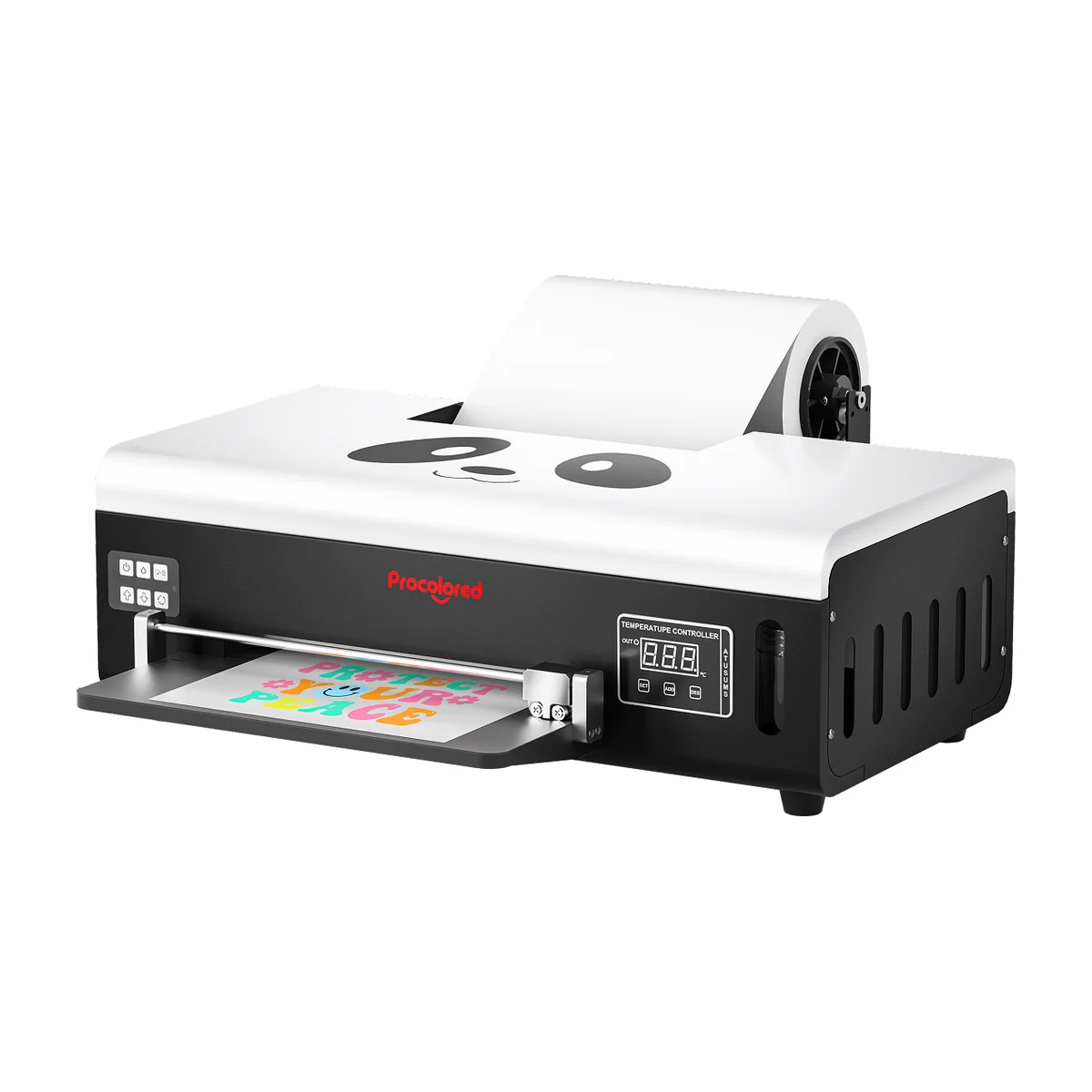 Procolored F8 PandaEpson L800 | 8.3/10 | $1,599 Nov 15, 2026 | $1,799 with oven | 8.2 in | Letter/A4 print in 7 min, 8 prints per hour | Circulation, scheduled self-cleaning | Windows | 6 mo head · 12 mo machine | Check price at Procolored |
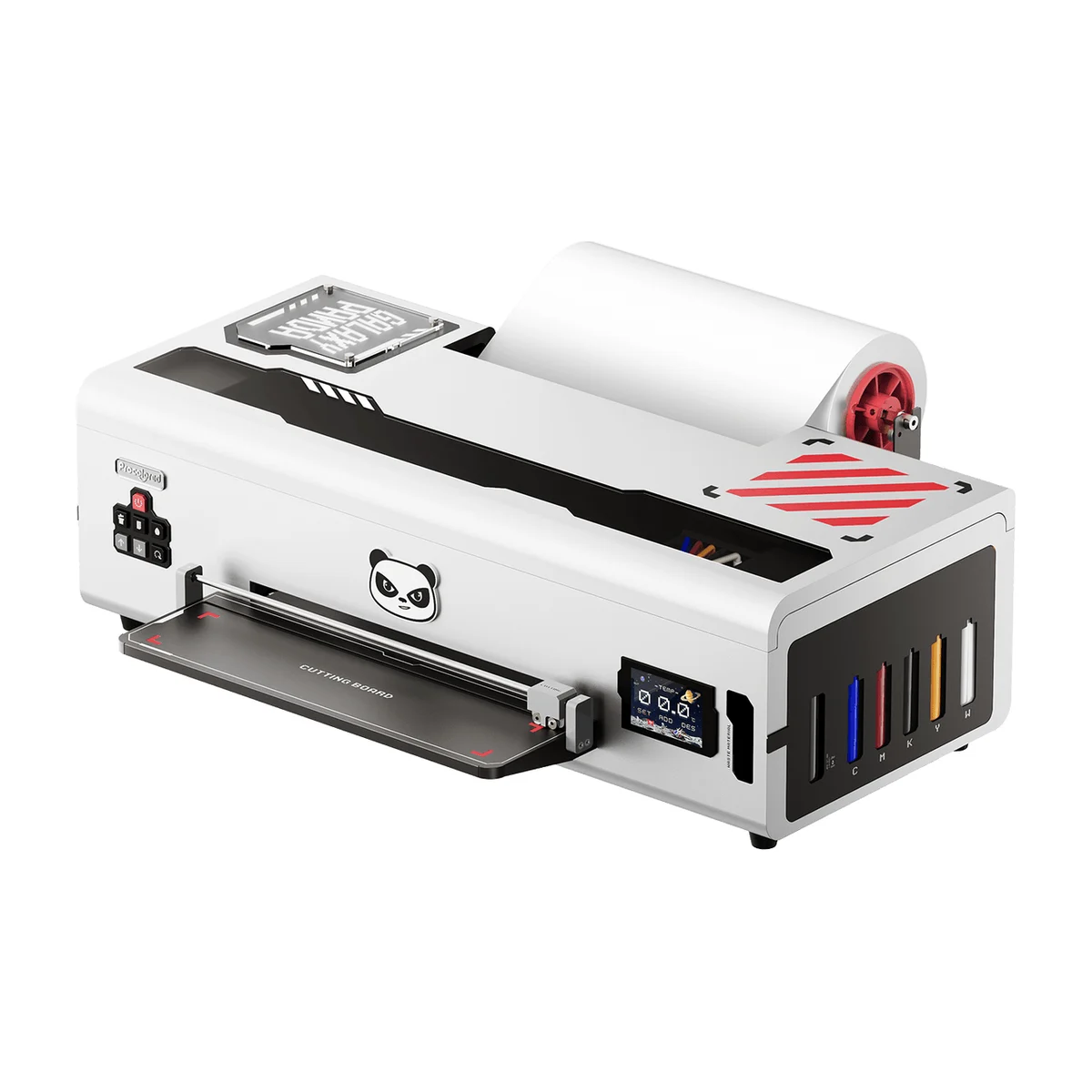 Procolored K13 LiteLH-500 (Procolored LiteHead) | 8.2/10 | $1,999 Nov 15, 2026 | $2,499 with oven | 13 in | Letter/A4 print in 12.5 min, 5 prints per hour | Circulation, scheduled self-cleaning | Windows | 6 mo head · 12 mo machine | Check price at Procolored |
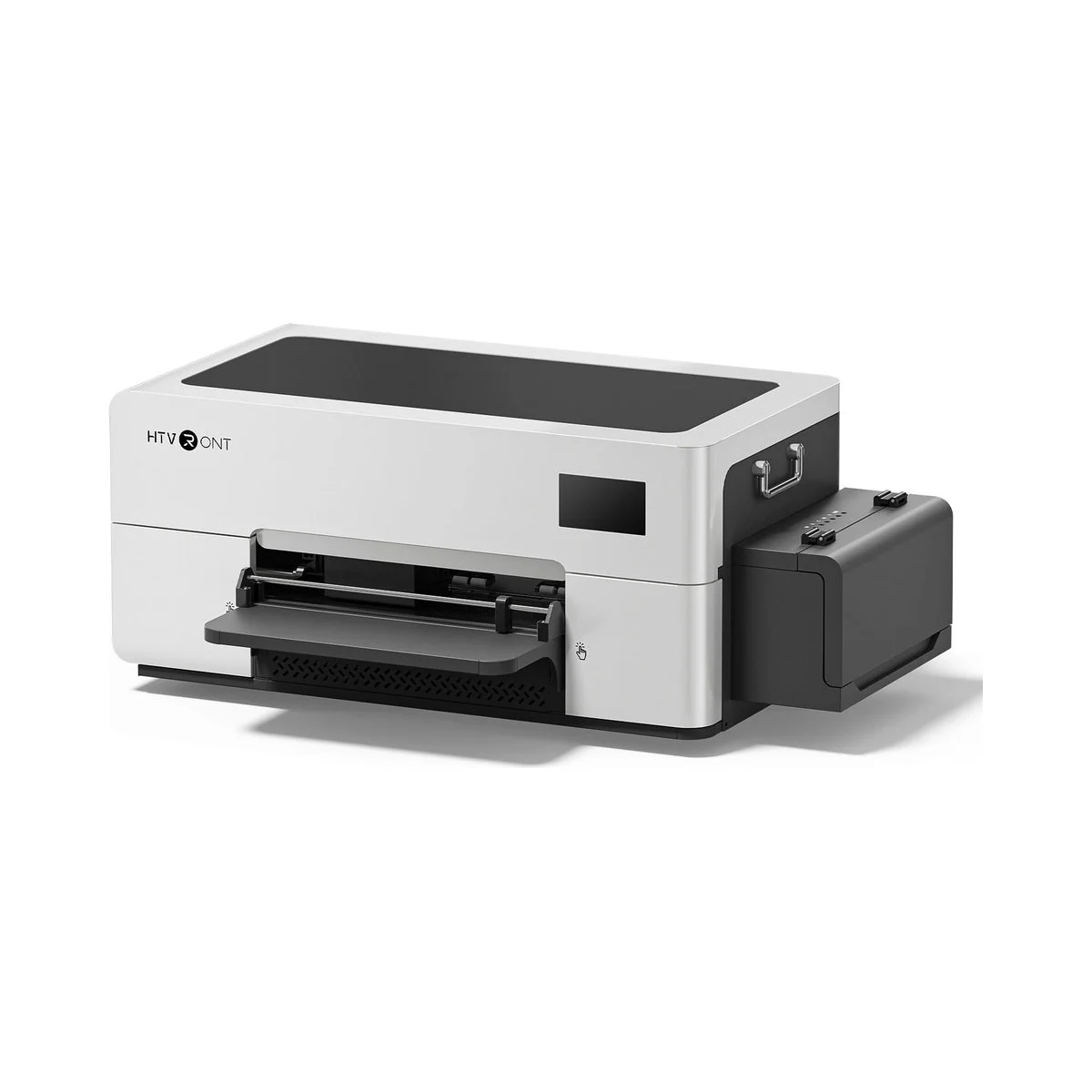 HTVRONT D2Epson F1080 (original, per HTVRONT) | 8.6/10 | $2,549 Nov 15, 2026 | $2,799 with oven | 13 in | Up to 16 sq ft per hour | Circulation, stirring, scheduled self-cleaning | Windows | 6 mo head · 12 mo machine | Check price at HTVRONT |
What about one-offs and small runs?
Both processes are made for short runs: no screens, no setup fee, one piece is fine. The difference is the blank. Sublimation needs a polyester or coated blank for every product, which you stock in advance. DTF lets you print transfers ahead of time and press them on whatever garment the customer picks, in any color. You can keep a drawer of ready transfers for your best sellers and press them on demand.
If customers keep asking you for a black cotton tee, that is the signal to add DTF. It does mean more supplies to manage: film, powder and five inks instead of paper and four.
Which one is more work day to day?
DTF, and it is worth being honest about it. A sublimation printer can sit for a while between jobs. A DTF printer has white ink, which is heavy pigment that settles and dries. Procolored's K13 Lite manual asks you to shake the white ink every day and warns that more than two weeks without printing can clog the head.
The better DTF printers take some of that off your hands. The HTVRONT D2 keeps cleaning its head and stirring its white ink with the computer off; the xTool Apparel Printer Plus adds a humidifier and wet capping. Our DTF printer maintenance guide spells out the routine.
DTF also has two more steps per print: powder and cure. Curing gives off fumes and a smell, so the oven needs a ventilated spot; Procolored's manual says so in plain words.
Can you convert a sublimation printer to DTF?
People ask because both start from Epson-style inkjets. In practice a sublimation printer has no white channel plumbing, no circulation and no film path, and a conversion means flushing the dye ink and installing DTF ink and RIP software. Third parties sell kits for some Epson models; Epson itself warns that non-genuine ink "could cause damage not covered by the printer's limited warranty".
We go through what a conversion involves, without step-by-step instructions, in the Epson ET-8550 DTF conversion guide. Short version: it is a project for tinkerers, and the purpose-built printers start at $1,599 with a warranty.
Should you run both?
Plenty of small shops do. Sublimation handles mugs, tumblers and white polyester sportswear at a very low cost per piece. DTF takes the cotton, the dark colors and the odd placements. The two share a heat press and a design workflow, so the second process costs less to add than the first.
- You sell drinkware and light polyester: stay with sublimation.
- You keep turning down cotton and dark-shirt orders: add DTF. For small logos the Procolored F8 Panda is the lowest ticket; for full fronts, a 13-inch model such as the Procolored K13 Lite.
- You are starting from zero with t-shirts: go DTF first. See the cheap DTF printers we can stand behind.
Frequently asked questions
Is DTF better than sublimation?
For cotton, dark garments and mixed fabrics, yes: sublimation cannot print them. For white polyester and coated mugs, sublimation is cheaper and leaves no feel. The better one is the one that matches what you sell.
Can I use a sublimation printer for DTF?
Not as it is. DTF needs white ink, DTF pigment inks, film handling and RIP software. Converting a printer means replacing the ink system, which the manufacturer does not support.
Does DTF work on polyester?
Yes. DTF transfers bond to polyester as well as cotton and blends; xTool lists polyester, spandex and nylon among the fabrics for its Apparel Printer Plus.
Which lasts longer, DTF or sublimation?
Sublimation dye is part of the fiber, so it does not crack or peel. A DTF transfer is a surface layer that the makers describe as washable and stretchable when cured and pressed correctly.
Do I need a different heat press for DTF?
No. A flat heat press used for sublimation also presses DTF transfers. InkSonic's R1390 page gives 275 to 320°F for 30 seconds for the DTF press step.
Our selection
Three printers from this guide, with their score and the price we read on the maker's store.
Procolored K13 Lite
A first DTF printer for a home shop printing up to a few dozen shirts a week.
HTVRONT D2
Crafters moving up from a heat press who want a kit that arrives complete.
Procolored F8 Panda
The smallest desk and the smallest budget: left-chest logos, kids' tees, hats, tote bags.